Exhibition. Galleri CFF
Ida Taavitsainen: Within Four Walls
2026.02.06 - 2026.03.21
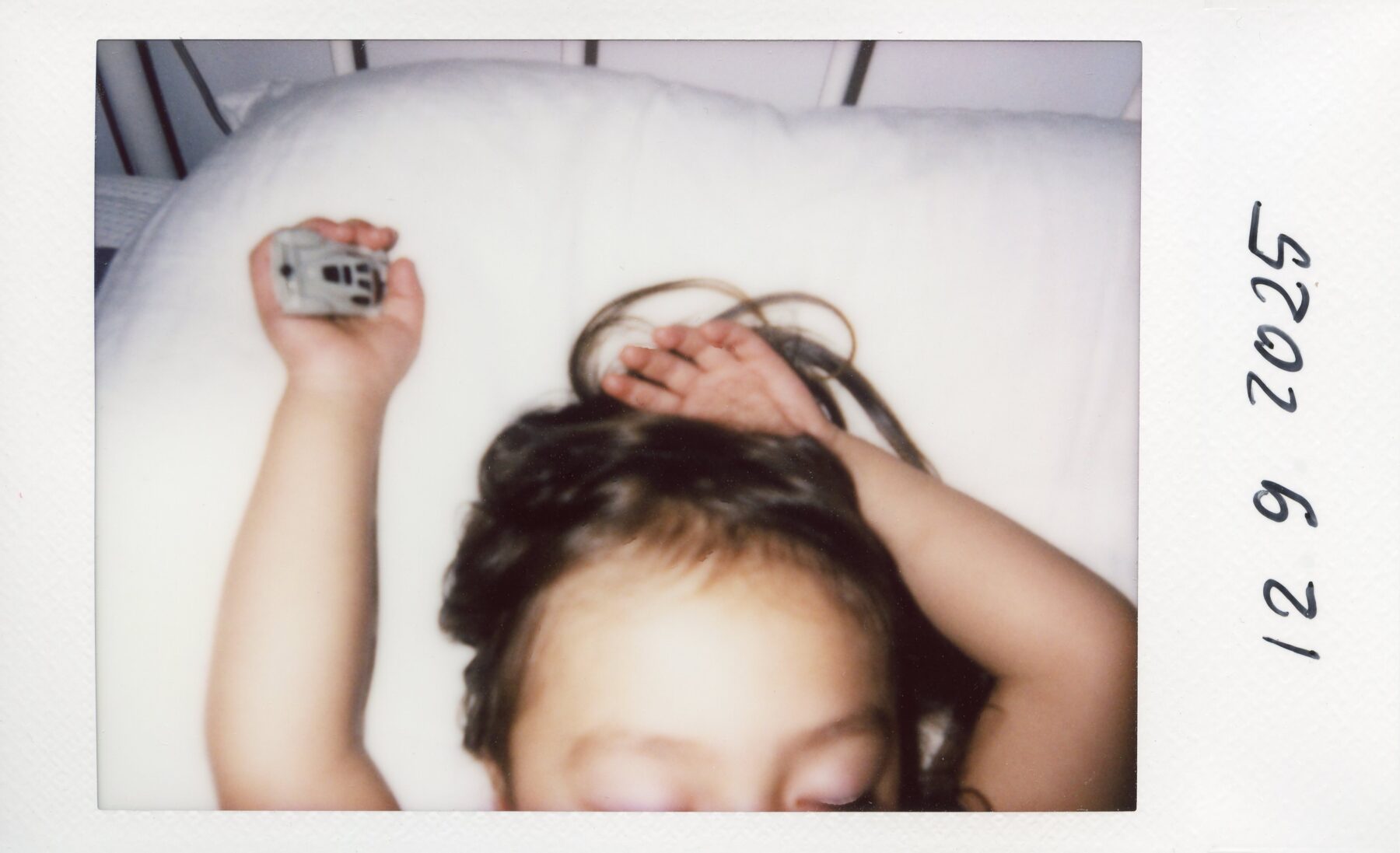
When Ida Taavitsainen was expecting her second child, she decided to start documenting her family’s life with an Instax camera. The pictures take physical form immediately and multiply as the children grow.
Each photograph is dated, and the artist has written diary entries alongside the images. Limitations create freedom, and Ida Taavitsainen decided to only photograph in the family’s home after her son’s birth. The work began out of a need to process what happened during the day and to depict the great love and joy of everyday life, as well as the feeling of confinement that a new phase in life can entail. The exhibition presents over a hundred images taken in recent years. Together, they create both a general story about parenthood and a personal depiction of a growing family in Helsinki.
The exhibition is a collaboration with Tempo Documentary Festival and has received support from the Swedish-Finnish Cultural Foundation.
_________________________________________________
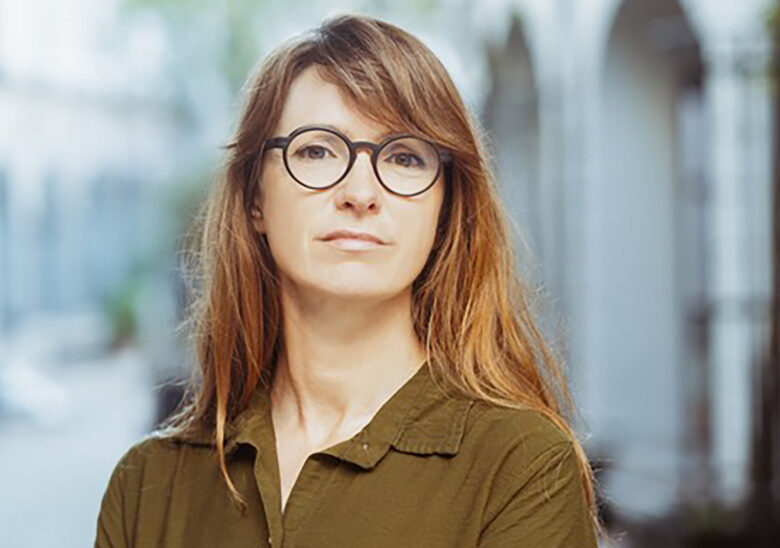
Interview with photographer Ida Taavitsainen and curator Kristyna Müller
KM: Can you start by telling us how the exhibition “Between Four Walls” began?
IT: It wasn’t planned as a project from the beginning. When the pandemic restrictions to Japan finally eased, my husband went there with our daughter to visit his family and asked if I wanted anything from there. I didn’t want to go as I was pregnant and the trip there now takes about 14 hours. I replied that I would like an Instax camera, I thought it was a nice way to photograph my children.
The pictures stay on the phone if I take them with it, and if I take the pictures on film, it takes a very long time before I have them physically. I had a need to create images, but also to get them directly in my hand and to be able to take them easily and spontaneously. I didn’t really have a plan, no system, but soon I noticed that I only photographed inside, at home, and continued with that. It was also a way not to put too much pressure on myself.
At some point, I got into diary writing. I have always written a diary, but in the last 15 years it has been more sporadic. I had things to process, covid was starting to end, my husband was having an early midlife crisis, the planet is being destroyed, the war in Ukraine is going on, and should I really have another child in this world? There was a lot to process.
KM: In your case, it is the mother who is also a photographer and thus becomes relatively invisible in your pictures, and by extension in the story of the family. What are your thoughts on that role?
IT: I think it’s a general mother problem. I work as a workshop leader at the Finnish Museum of Photography and have workshops with parents and young children, mainly mothers. During the meetings, I offer to take a picture of them together and often it comes up in conversation afterwards that as a mother you are quite invisible in pictures. In life you are not so invisible, the children usually come to me if they want something. In the exhibition there is a picture of me from the maternity ward and some selfies, but you forget yourself easily.
KM: How does this series differ from how you usually work?
IT: Mostly in that it is so spontaneous, everyday, it is not that I take time out specifically to photograph this. Any time when we are at home I can feel that I should take a picture, sometimes there are two pictures in a day, sometimes none in a month. I don’t edit these pictures, one picture didn’t make it because it ended up somewhere else, but otherwise all the pictures are included.
KM: Why did you choose this technique?
IT: It’s different to be photographed like this than with the phone. I try to avoid having the phone with my children. I also want something that is my own tool that the children can’t take. They do want to take the Instax camera, but it’s mine. You look at the mobile picture in a different way, this picture comes out, we wait with excitement for what it will be, it’s a different process. I know myself and no other alternatives would become physical pictures at this stage of life.
KM: I see your project as part of a tradition where female artists create a framework for themselves to continue working as life changes. Other examples could be handicrafts and works in smaller formats as there is neither time nor space for other creations. How do you see it?
IT: It is for me too, absolutely. I work analogously, but one of several reasons why I didn’t want to do it on color film is that when you work analogously in a color darkroom, you come into contact with chemicals, and I couldn’t be in the darkroom because of pregnancy and breastfeeding. If you want to keep working when you have a family, you almost have to turn the camera towards yourself and your immediate circle. I have worked with the theme before, but perhaps more with earlier generations in my family. It would be nice to see artwork by new fathers as well.
KM: How does it feel to be so personal in an exhibition?
IT: That remains to be seen. I haven’t made the works with the idea that they will be exhibited. But since I am an artist, the possibility has always been there. Of course, I have wondered if I am doing the right thing for my children. Am I doing like everyone else who puts pictures of their children on the internet? I see it partly as a different thing, I don’t document every step they take to put them on social media. My daughter is eager to be in an exhibition, I have asked her if it is okay, if there is anything she doesn’t want to be included and together we have removed a picture.
There are many fine works of art where artist parents have taken pictures of their family, when you read interviews with, for example, Sally Mann’s children as adults, they don’t seem to be too traumatized.
The texts that go with the pictures are very personal, but none of what I talk about are any big secrets, mostly universal feelings that anyone can have and many can relate to. I don’t mind showing it, I’d rather show a slightly more realistic picture than an Instagram childhood where everything is completely perfect.
KM: Thank you very much Ida!