Exhibition. Fönstret
Magnus Westerborn: The Gadget
Magnus Westerborn
20240216 - 20240308
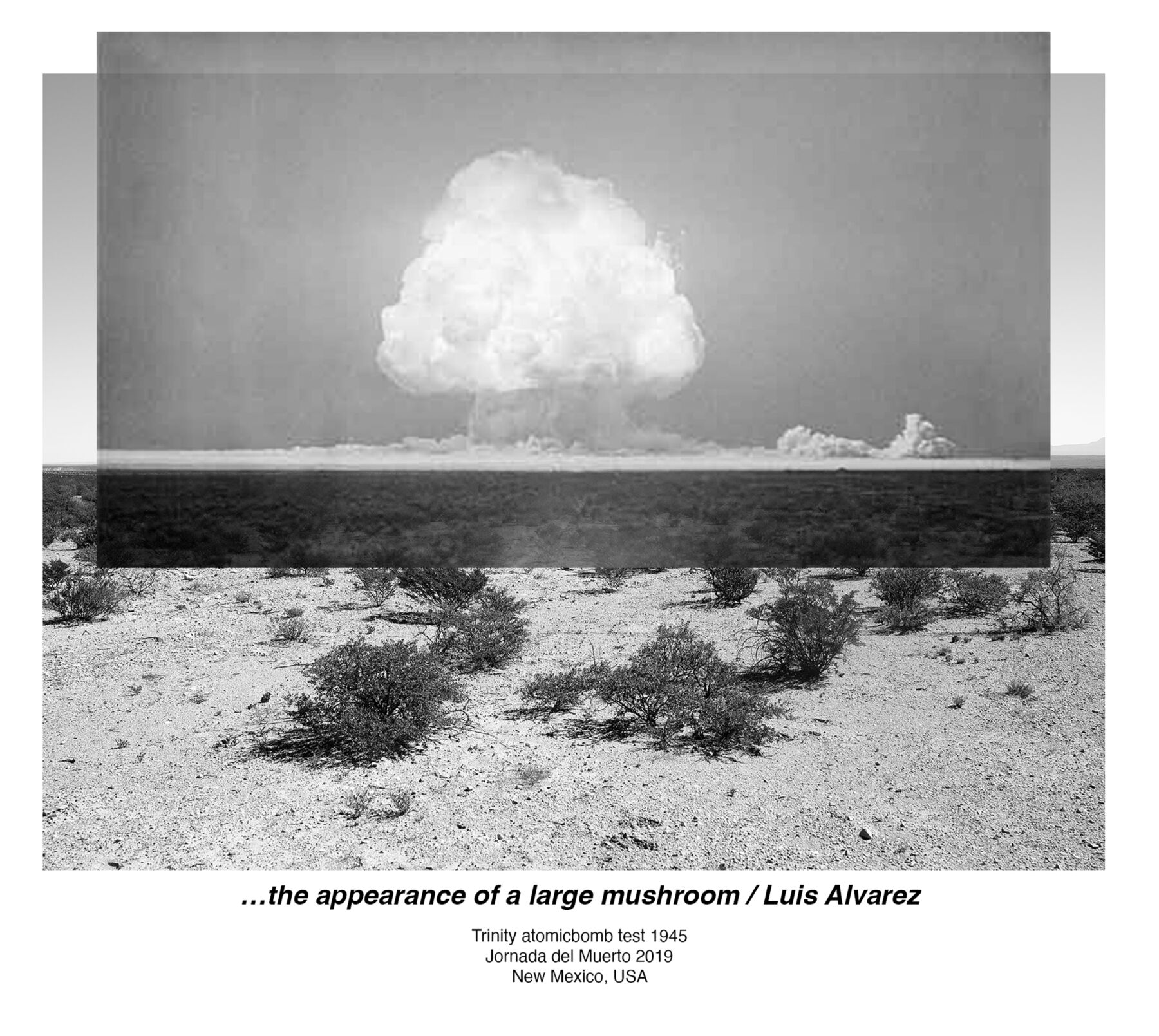
On July 16, 1945, an atomic bomb detonated in the New Mexico desert, and mankind entered the atomic age. Based on his documentary work American Bomb about the Manhattan Project, Magnus Westerborn presents the work The Gadget in the Window.
The bomb was the result of the top-secret Manhattan Project, which was initiated three years earlier in the USA with the goal of developing the new weapon – the atomic bomb. Facilities for research and development were built in various American states. The project was led by physicist Robert Oppenheimer and military General Groves from the newly built city of Los Alamos in New Mexico.
Two methods were developed by the Manhattan Project for the detonation of atomic bombs. One based on uranium, the other on plutonium. The uranium bomb, which was of the ‘gun-type’ model, involved a projectile of uranium being fired at a stationary target to initiate a chain reaction. The uranium bomb was used against Hiroshima and was named Little Boy.
The plutonium bomb was based on the implosion principle; this meant that plutonium was compressed by an enveloping explosive charge to achieve a chain reaction. The plutonium bomb was used over Nagasaki and was named Fat Man.
There was uncertainty as to whether the plutonium bomb’s technology would work. The scientists decided to conduct a test detonation. Robert Oppenheimer named the test bomb The Gadget. The site for the test was named Trinity Site. At 05:29 on July 16, 1945, a successful detonation of The Gadget was carried out.
Three weeks later, Nagasaki and Hiroshima were bombed.
In 2023, Magnus Westerborn released the book American Bomb, a documentary work about the Manhattan Project. He works as a freelance photographer and has published several photo books.