A few questions for Andreas Brännström, project manager for Periphery ’23
Hello Andreas! You are the project manager for the project Periphery ’23, which is currently being carried out in Västernorrland, Västerbotten, and Norrbotten and will be released this fall.
Would you like to tell us a little more about yourself and your fanzine background?
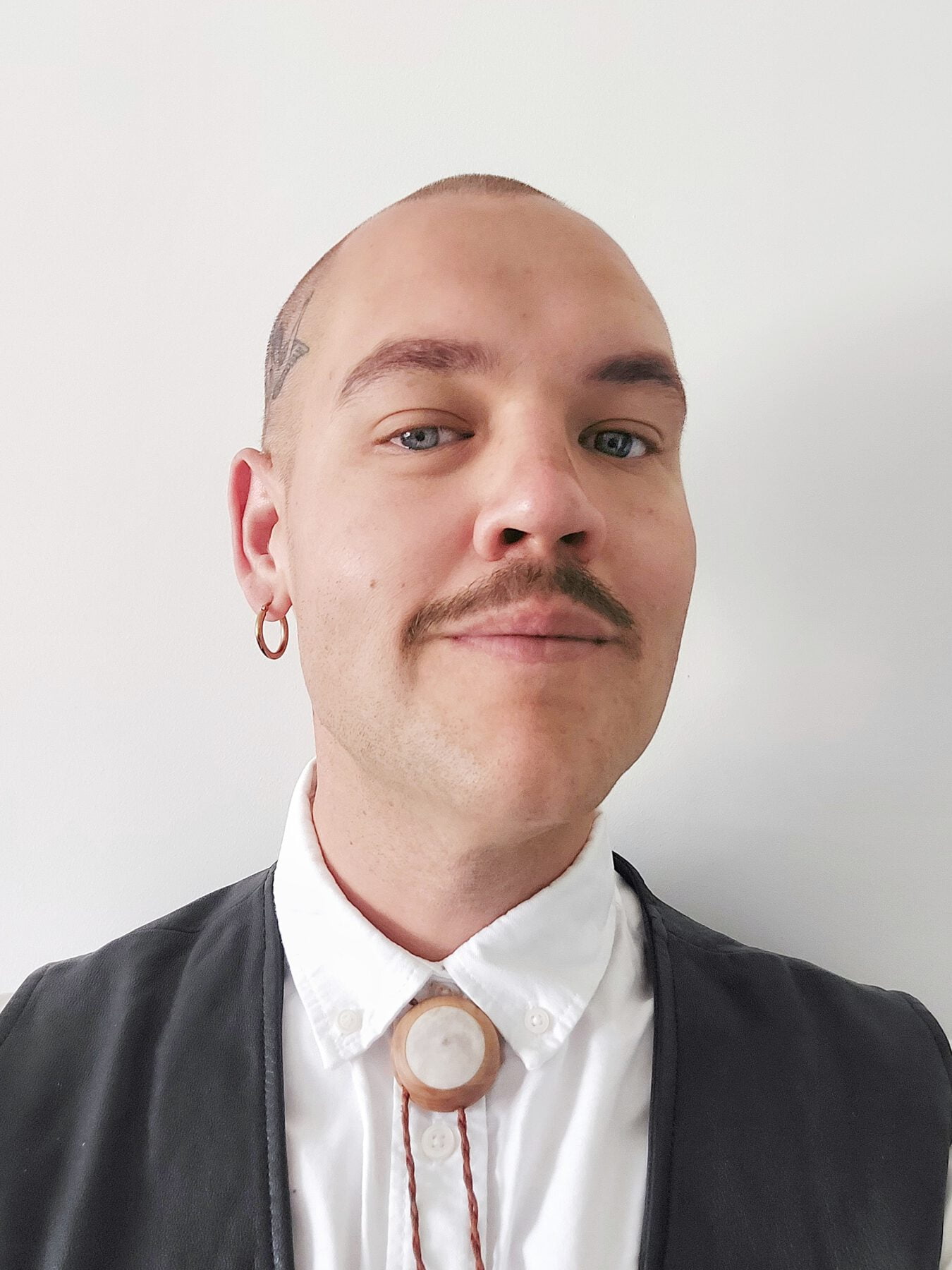
My name is Andréas Brännström, an artist living in Umeå, and I run Galleri Syster in Luleå together with Anja Örn, Sara Edström, and Katt Skarin.
I am from Skellefteå, where, before moving to Umeå, I was very active in the DIY culture, mainly around music, where I and friends ran the cassette label/cooperative Periferin, and it was through that scene that I first came into contact with fandom and fanzinism in my teens through the zinist Jonas Juuso in Jävre. Fanzines and fandom are close to my heart as a movement, culture, and expression, and for over ten years I have collected over 200 fanzines from Norr- and Västerbotten published after the year 2000.
One of the qualities of the fanzine is the total freedom in both content and form, even if there are traditions such as copier aesthetics, A5 format, and stapled spine.
What do you think has been the most surprising thing about the project?
What has been most surprising about Periphery ‘23 has been how the participants have embraced the opportunities and limitations that exist in the format. Each zine has an independent expression that resonates well with the photographers’ material and the zine’s themes and content. The sum of the parts that make up Periphery ‘23 shows a fantastic breadth when they are brought together in the box.
Can you give us some insights into what kind of material we will be able to see in Periphery ’23?
The box with the photographers’ zines gives a fantastic insight into the various artistic creations. Based on the project title Periphery, one can see how the participants have taken this opportunity to broaden their expression, explore and experiment, give space to projects that have not previously found their forum, or explore the material in a new format. The zine also shows a breadth based on the photographic expression; zines that are, for example, traditional documentary, bordering on painting and drawing, exploring the future and tradition of digital and analog photography. This is finely intertwined with poetic, biographical, prosaic, and journalistic texts.