Exhibition. Galleri CFF
In Relation To – an exhibition about space and place
20200912 - 20201004
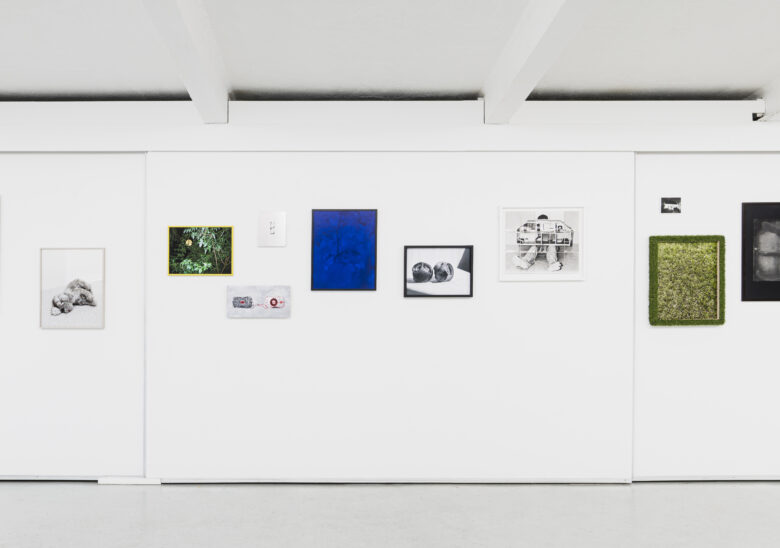
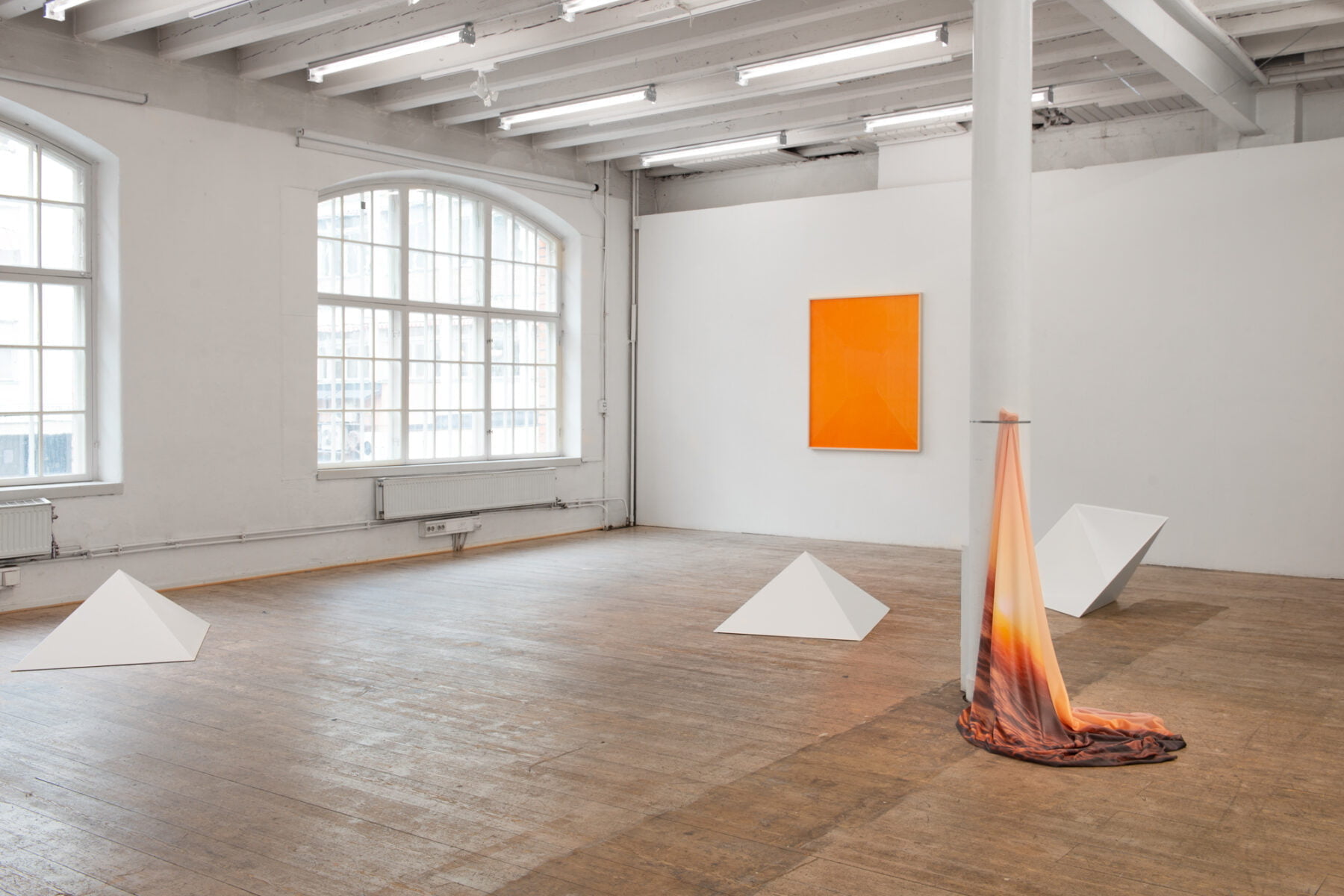
In Relation To – an exhibition about space and place, in which four artistic practices relate to different places that they transfer to the exhibition space. The participating artists Savas Boyraz, Lotta Törnroth, Inka & Niclas and Linda Hofvander, who all work with photography as a medium, operate in very different ways, but have a common ability to move the visitor into their own work through their works. The possibilities and limitations of the space are put to the test and photography’s ability to grow outside the frames is explored.
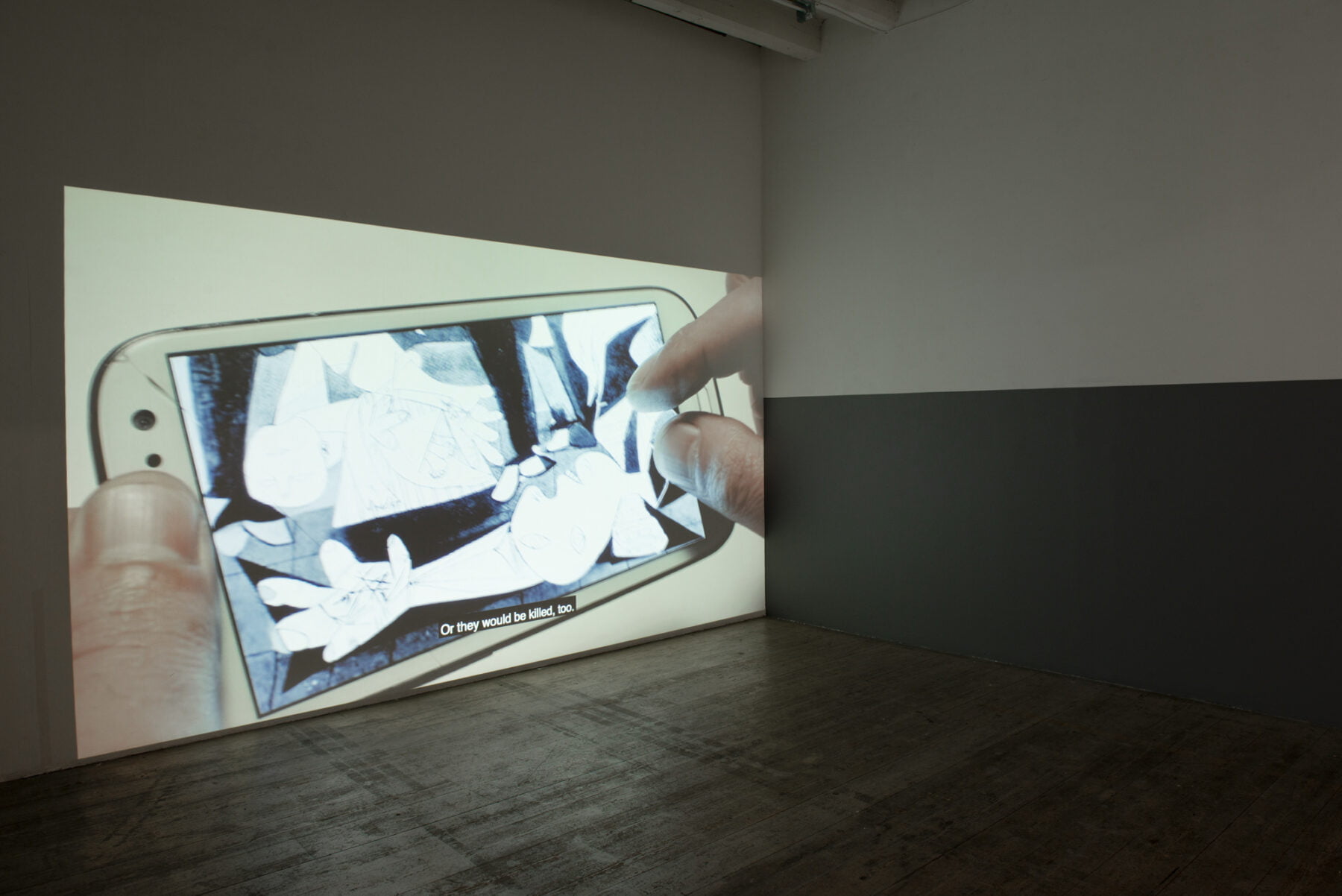
Savas Boyraz was in northern Kurdistan in Turkey between 2016 and 2019, where he used the camera to document the devastation in the conflict-affected area. He focused on Yüksekova in the Hakkari area but was not allowed to work freely, which affected his approach. In the photographs, damaged parts of houses are set against a calm landscape with a clear horizon. In the video work The State we are in, the artist has placed the camera in a scrap collector’s wagon. The film follows his day during which he encounters Pablo Picasso’s painting Guernica. Through the meeting, the artwork is placed in a Kurdish context and creates a link of devastation and pain between East and West. The installation brings together photographs and video work through a painted wall surface that functions as an extended horizon, but it also refers to the gray color used to protect walls from visitors in public buildings in Turkey.
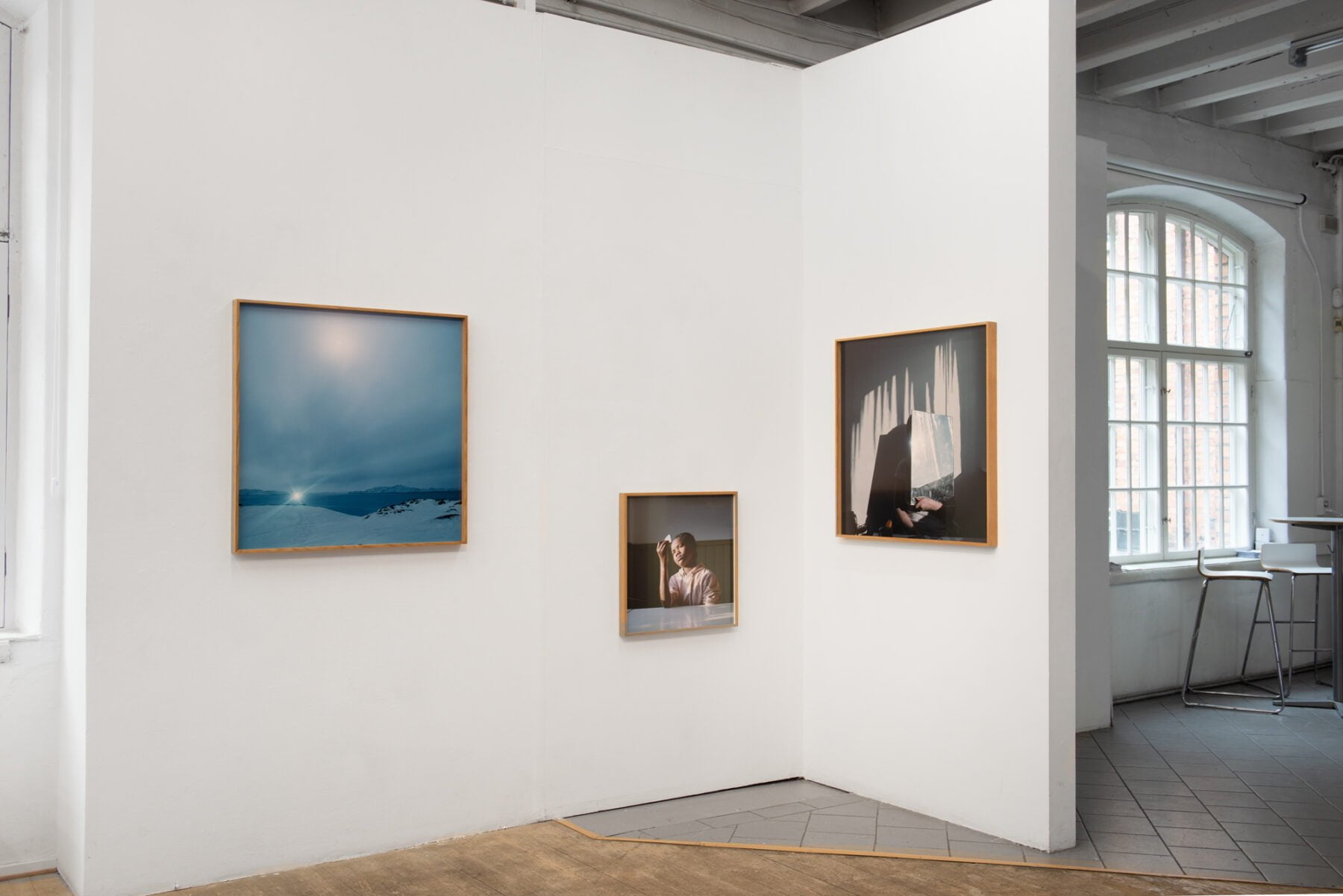
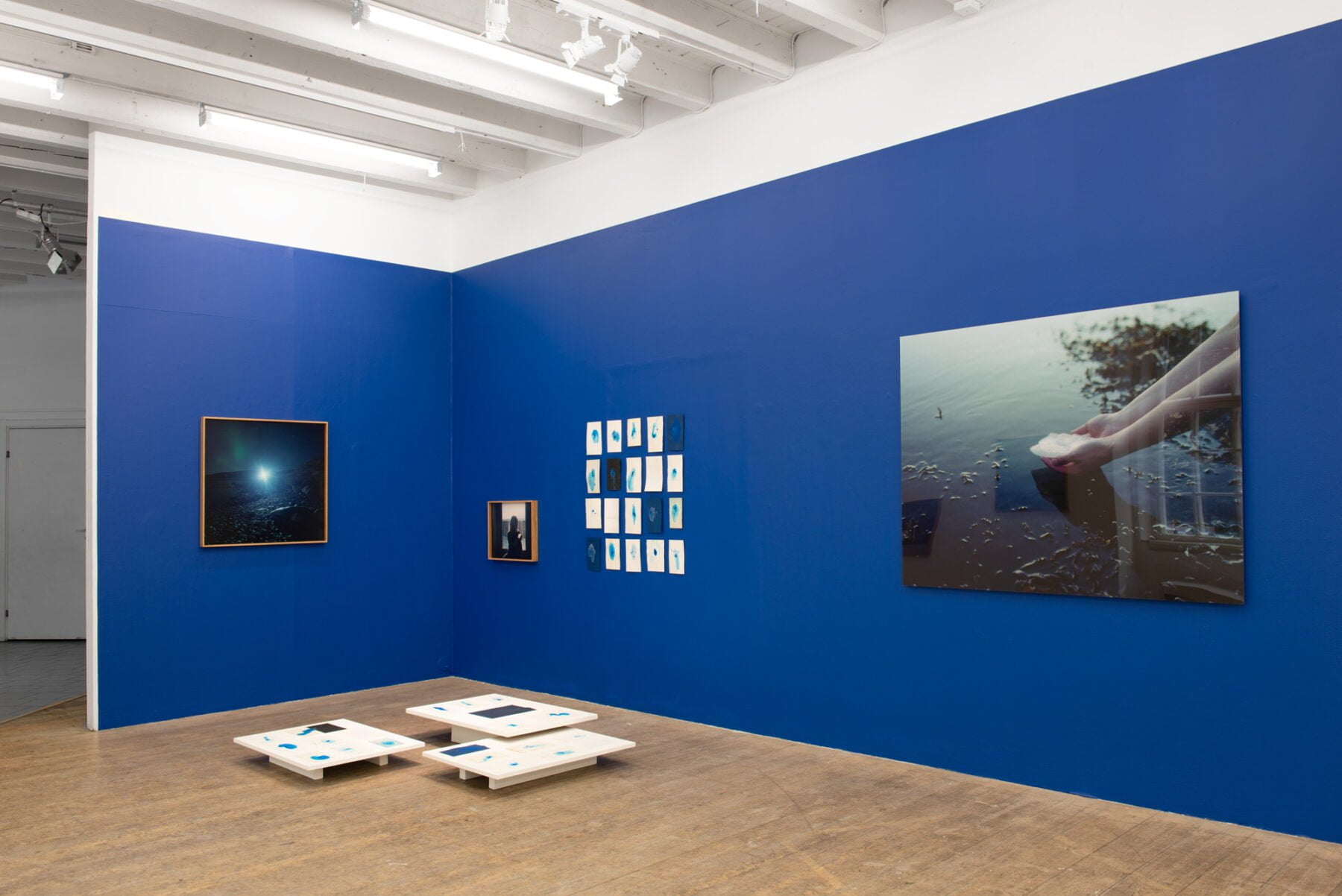
Lotta Törnroth’s series Imaginary Islands explores the sea as a place and how humans relate to it. Törnroth has spent a lot of time in different places where life has been shaped by the sea, including Greenland, the world’s largest island. In these places, there is an ambiguous relationship with the sea. She has long been fascinated by the dangers and disasters of the sea and spent time at places where major accidents have occurred to understand what this does to places. When she visits the places, she sometimes acts as a lighthouse, and takes photographs with long exposures where she shines into the camera with a light source. A kind of outstretched hand to the place’s history and the people who perished there. During her travels, she has also collected small amounts of water from the seas she has visited. In this way, the sea is physically present in the exhibition space, as Törnroth has allowed ice cubes from these seas to melt on paper, thus creating blue islands where the unique salt composition of different seas appears.
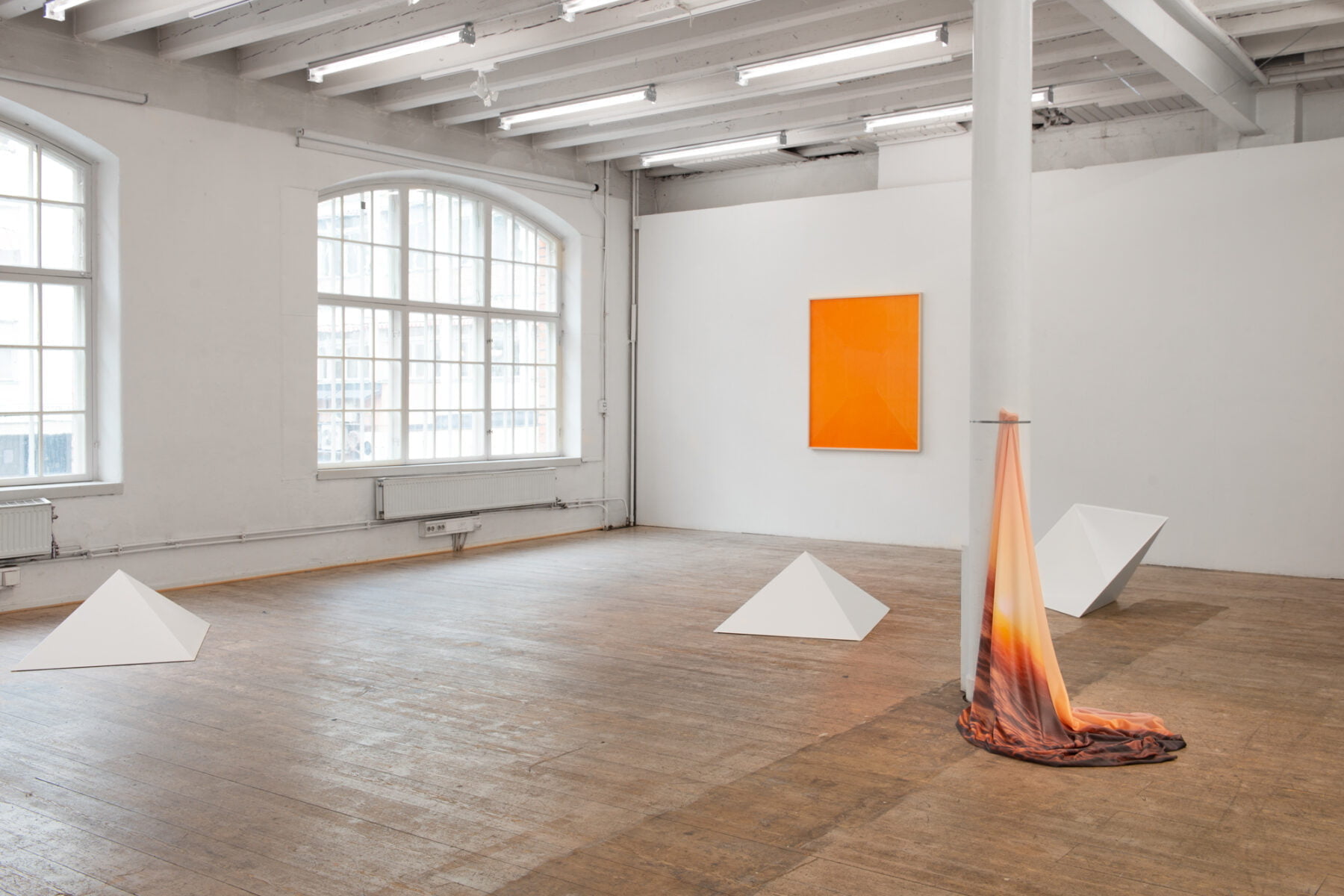
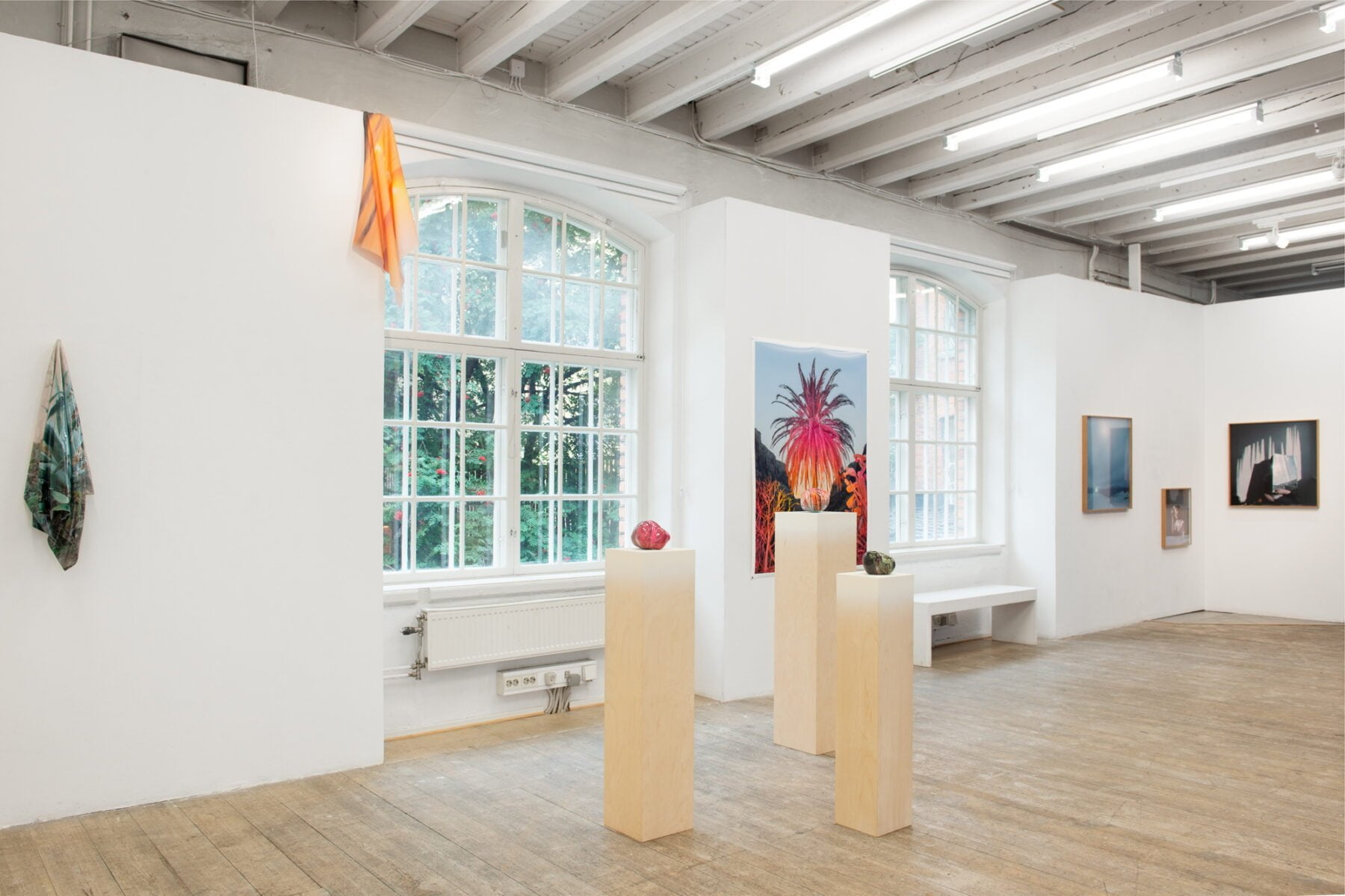
Inka & Niclas have worked as an artist duo since 2007. In their work, they often return to the landscape as a place and phenomenon. Through landscape photography and its constructions, they examine man’s relationship to nature. The landscapes they explore are often magnificent ideal motifs that can be found on every other holiday postcard and on every image consumer’s retina. It can be about glittering sunsets, palm trees at dawn, tropical forests, wild mountains or barren landscapes. Places that through photography have been boiled down to the idea of a type of place and in that way have become a caricature of themselves. The duo is interested in man’s photographic relationship to these places. The works can be seen as reflecting ideas about ‘having been there’ with a snapshot or about how the landscape can be visually worn down by the amount of photographs taken of it. In the exhibition space, the motifs have moved out onto different types of objects, to clarify the photographic and flat in these views, but also to, for example, lift the landscape into the landscape through the stones that have photographs on the surface.
Linda Hofvander’s work moves within the deeply photographic. She breaks down the photograph into its most basic components and explores each segment separately, such as light, perspective, scale and surface. Each individual part is allowed to develop to its peak in images or suites. The studio is the place for these visual analyzes. Her photographs do not have a clear narrative, but an absence of narrative does not mean an absence of context. The context here is seeing. By creating uncertainty in the viewer about what is depicted, the camera’s and seeing’s different mechanisms are made visible. The photographs and sculptures become a visual game where the viewer can step into the artist’s studio and through her eyes look at the photograph. In the exhibition space, a photograph and three sculptures are woven together with an oversized photograph which covers an entire wall that relates to the room it is in, but also to the room where the image was created.
Due to the current situation with Covid-19, we will limit the number of visitors to the premises and take measures to reduce the spread of infection. We ask all our visitors to follow the Public Health Agency’s recommendations and stay home at the slightest symptom.
Program and activities
11 September 17–20
Opening
Three bookable times 17–18, 18–19. 19–20. Pre-registration is mandatory. Register at info@centrumforfotografi.se. Mark the email with Vernissage.